We’re Heading to ALA Annual 2026 — Come Race With Us in Chicago!
Big news! Blu Track is heading to the American Library Association Annual Conference & Exhibition in Chicago, June 25–29, and we couldn’t be more excited to be there.
Both Blu Track and the ALA are making history this year, as we exhibit for the first time and the ALA marks its landmark 150th anniversary. Milestones like that are something worth celebrating — and we think a racetrack is a pretty great way to do it.
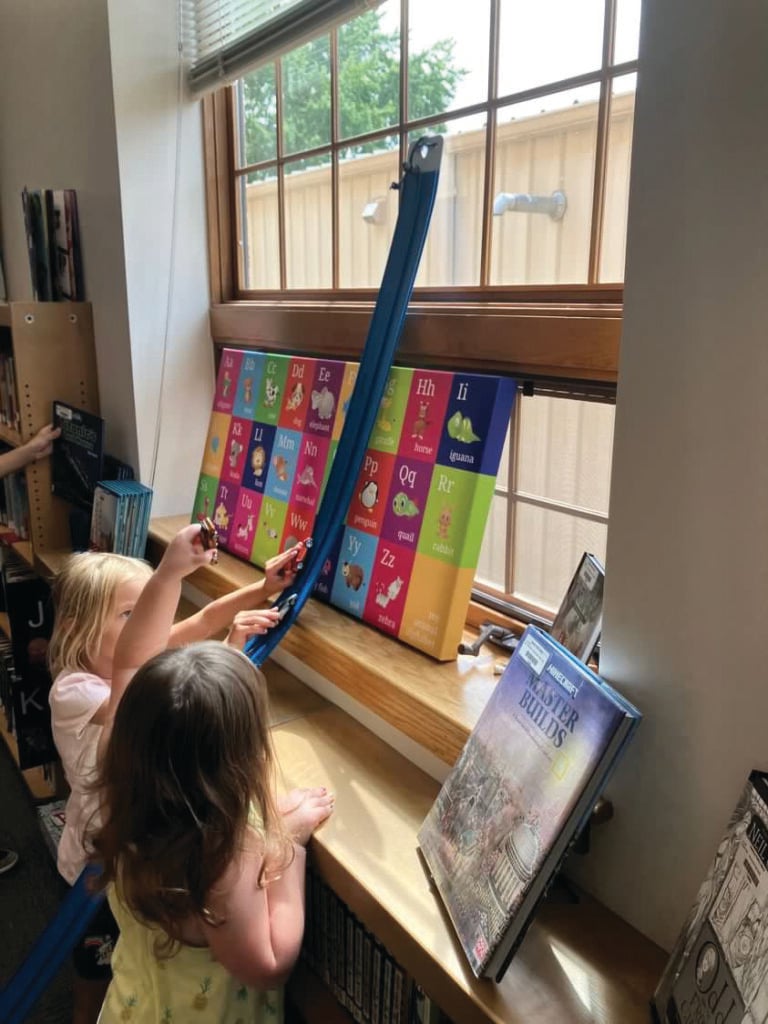
Libraries create conditions for discovery. They stock the shelves, open the doors, and trust that inquisitive people will find what they need. Blu Track matches this energy, a toy fueled by ingenuity, gravity and the endlessly magical power of play. A librarian, educator, or parent can set up the track, step back, and watch what happens.
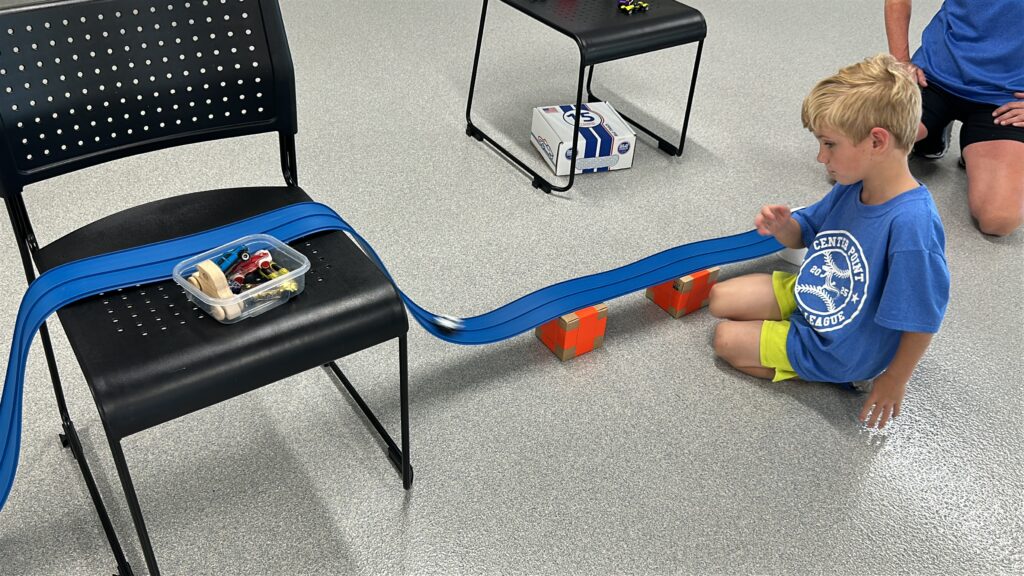
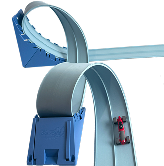
In our experience, what happens is imagination unleashed. A child picks up a car and holds it at the top of the ramp. They let go. They watch it fly. They immediately want to know: what if the ramp were higher? What if I used a different car? What if I added a loop? STEM concepts seamlessly blend with curiosity and excitement. That’s not just play — that’s the scientific method, running on pure instinct and joy.
One of the things we love most about working with libraries is how naturally Blu Track connects to books. A story time featuring Little Blue Truck and Racer Red, or Wheels on the Bus can flow right onto the floor with a racetrack ready to go. Nonfiction titles like What Is Gravity? or Oscar and the Cricket become suddenly, vividly real when a child can feel gravity pulling a car down a slope they designed themselves.
Language blossoms in this kind of play without anyone having to prompt it. As kids play, they start narrating the action with phrases like my car went over the hill, under the ramp, through the tunnel, is faster than yours. They’re building vocabulary — positional words, descriptive words, comparative words — because they have something real and exciting to talk about. Numbers make an equally natural appearance, as children count cars, break out a yardstick to measure who can get the highest jump, and identify concepts like distance while trying to figure out whose car went the farthest.
What often strikes us most about watching kids with Blu Track is how much of their minds and bodies are engaged at once. Little hands work hard, gripping cars, releasing them at just the right moment, stacking ramps, adjusting angles. Kids reach, bend, step over the track, run alongside it, crouch down to peer at a car mid-roll. It’s a full-body, fully alive play experience that is equally engaging for young brains, even if they may not realize it. Blu Track boosts problem solving skills and builds confidence as children come to realize that maybe they don’t need their grown-up(s) to show them how to make a loop, ramp or jump, because maybe they can figure it out themselves – and when they do, their sense of independence blooms as they craft whatever track layout their heart desires.
Then there’s the social dimension. Some kids build alone, deep in their own design world. Others immediately want a teammate or three — someone to hold the other end, race against, argue with about the best ramp angle. Both are valuable. Often, both are happening at the same time, in the same space. Blu Track inherently holds room for the child who needs quiet independent play and the one who wants collaborative chaos, and every kid in between.
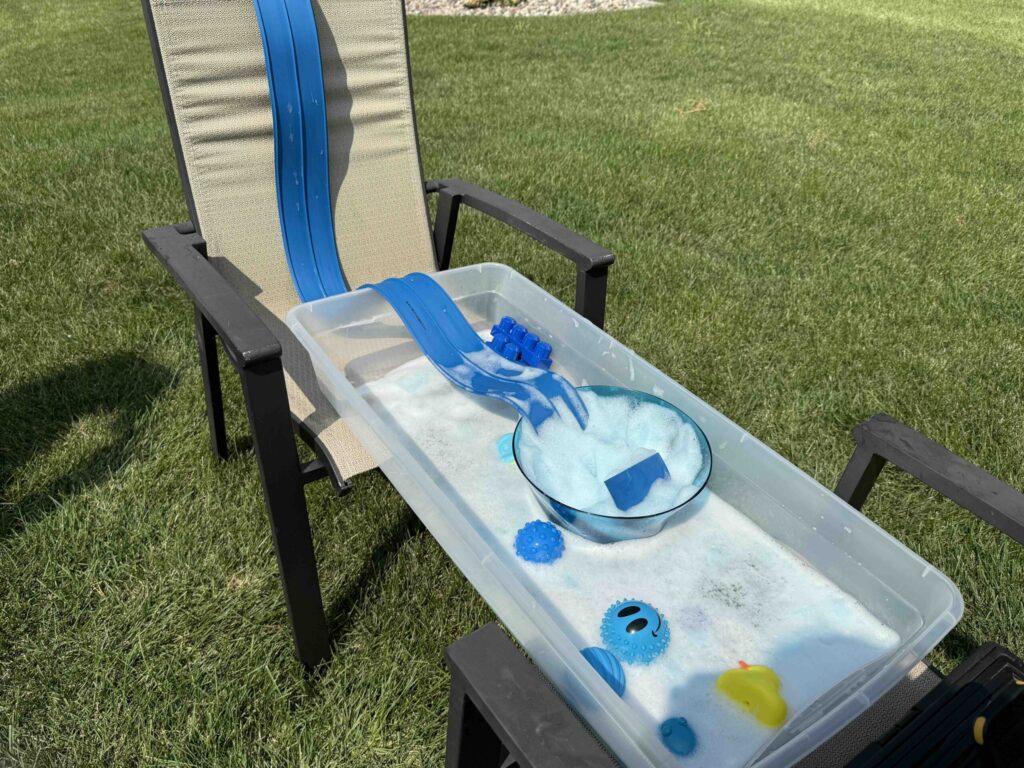
We also know all children experience the world through sensory input to some degree. Whether texture, sound, movement, and other outside input is a part of or the only way a young soul interacts with their surroundings, Blu Track adapts beautifully. Add sand to the landing zone. Scatter pinecones and twigs along the track path. Take the whole thing outside onto real grass and hills and let the earth itself become part of the design. Tuck in familiar toys, and a stuffed animal becomes a passenger, a block becomes a ramp support, or a book becomes a bridge.The possibilities truly are endless.
The STEM piece of Blu Track isn’t a layer added on top of the fun. It is the fun. Every single run down the track is a live demonstration of force, motion, gravity, and energy. Kids see friction when a car slows on a rough surface. They discover slope when a steeper ramp makes the car go faster. They’re experimenting with mass when they swap out a heavier car and watch what changes.
For older kids and more structured programs, Blu Track opens into a surprisingly deep curriculum: Newton’s laws of motion, potential and kinetic energy, velocity, momentum, acceleration, unbalanced forces. These aren’t scary concepts when you’ve already felt them in your hands. Blu Track just gives vocabulary to what a child’s body already knows.
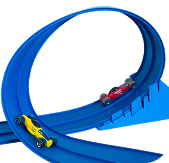
The engineering and design side is where we see the most magic. What is the most helpful slope of the track? With a big jump or hill, how do you keep cars on the track? How do you make a curve so that the cars maintain their speed? How do you build a loop that actually works? These are genuine design problems, solved through iteration and creativity — and every failed attempt teaches something the next one will use.
We know what library programming actually looks like: limited storage, shared spaces, programs that need to be set up in ten minutes and packed down in five. Blu Track was built for that reality. It’s lightweight, flexible, and fits back into its box without a puzzle-solving session. No batteries, no screens, no small parts, no fussy assembly. It works indoors on a smooth floor, outdoors on grass, and everywhere in between.
A single kit can stretch across age groups — early childhood through middle school and beyond — earning its shelf space in a way that single-purpose materials often don’t. And because Blu Track works with cars many kids already own (Hot Wheels, Matchbox, you name it), it fits into the world children already live in, broadening horizons without expecting kids to engage in totally unfamiliar territory.
We’ll be at the conference with track set up and ready to race. Stop by, build something, send a car down, and let’s talk about what Blu Track could look like in your library. Whether you’re deep into STEM programming or just looking for something that gets kids off the couch and into the world — we’d love to meet you.
See you at ALA in booth number 1945. The track is waiting.

Amy Fuller-Belding (MA), Education: Communications Specialist at Blu Track®, brings 30 years of classroom teaching experience and a deep commitment to play advocacy to the team. With a Master of Arts in Teaching and Coaching, Amy focuses on the educational and accessibility aspects of Blu Track® products, ensuring they inspire resilience and curiosity in kids of all ages. Her work is driven by a comprehensive approach to curriculum development that encompasses early childhood education all the way through to professional development for educators. Amy is particularly passionate about equity in education, frequently adapting tools and strategies to ensure that students with a wide range of unique learning needs find success and engagement. As Blu Track® exhibits at the ALA convention for the first time, Amy looks forward to connecting her professional expertise with her personal love for learning and exploring local libraries.