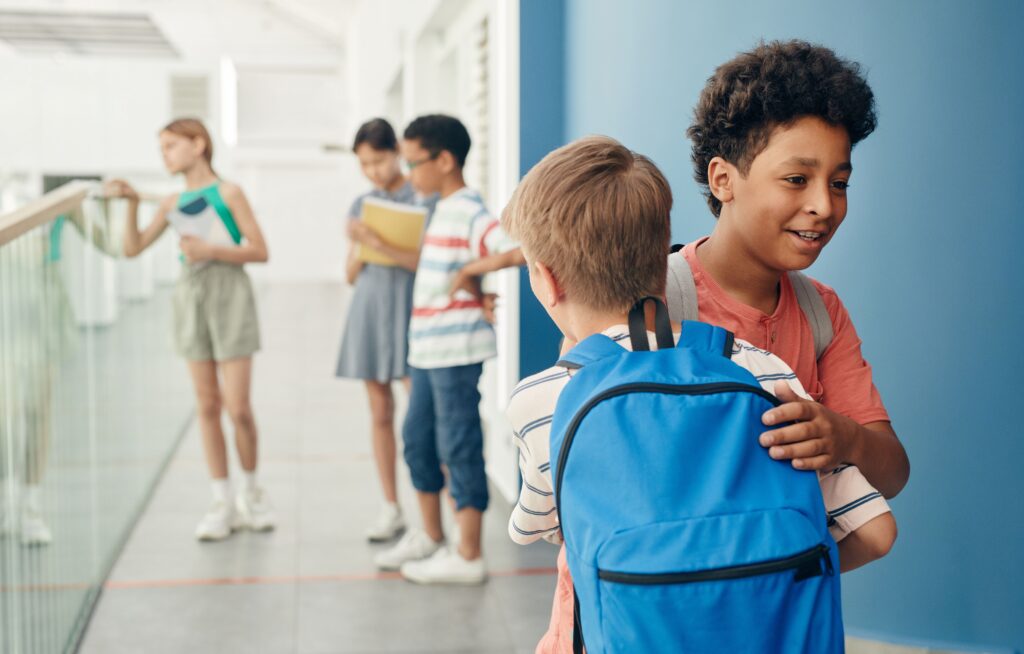
If you’ve ever picked up your child from school only to be met with tears, silence, or an explosion of energy that seems to come from nowhere, you’re not imagining things — and you’re definitely not alone.
School asks a lot of kids. They sit still, follow instructions, manage friendships, navigate transitions, and hold it together for six or seven hours straight. By the time the final bell rings, most kids are running on empty in one way or another. The tricky part? Every child empties out — and refills — differently.
Some kids need to retreat into quiet. Some need to move their bodies. Some need connection. Some need to build, draw, or make something with their hands. There’s no single “right” way to unwind, and trying to force a movement-hungry kid into quiet reading time (or a quiet kid into a noisy playdate) can backfire fast.
Here’s how to spot which kind of recharge your child needs — and how to support it.
What it looks like: This child comes home and heads straight to their room, goes monosyllabic at pickup, or seems to “shut down” for a bit before they’re ready to talk or engage. They’re not upset — they’re just full. Their nervous system needs space to process the day before they can take in anything new.
What helps:
Try this: Build a “quiet hour” into your after-school routine and protect it the way you’d protect a nap for a toddler. It’s not laziness — it’s regulation.
With Blu Track: One of the nice things about open-ended toys like Blu Track is that they flex to a quiet mood without any prompting. A child can lay out track alone on their bedroom floor, run cars through it as many or as few times as they want, and make as much or as little noise as feels right that day. There’s no rulebook telling them how loud or fast it has to be — which makes it a natural fit for a kid who just needs to putter on their own terms.
What it looks like: This child bursts out of the school doors like they’ve been sprung from prison. They’re antsy at the table, can’t sit through homework, or seem to have more energy at 4pm than they did all morning. Their bodies have been asking to move for hours, and now it’s payback time.
What helps:
Try this: Keep a “movement basket” by the door with a jump rope, sidewalk chalk, or a ball, so the choice to move is easy and immediate.
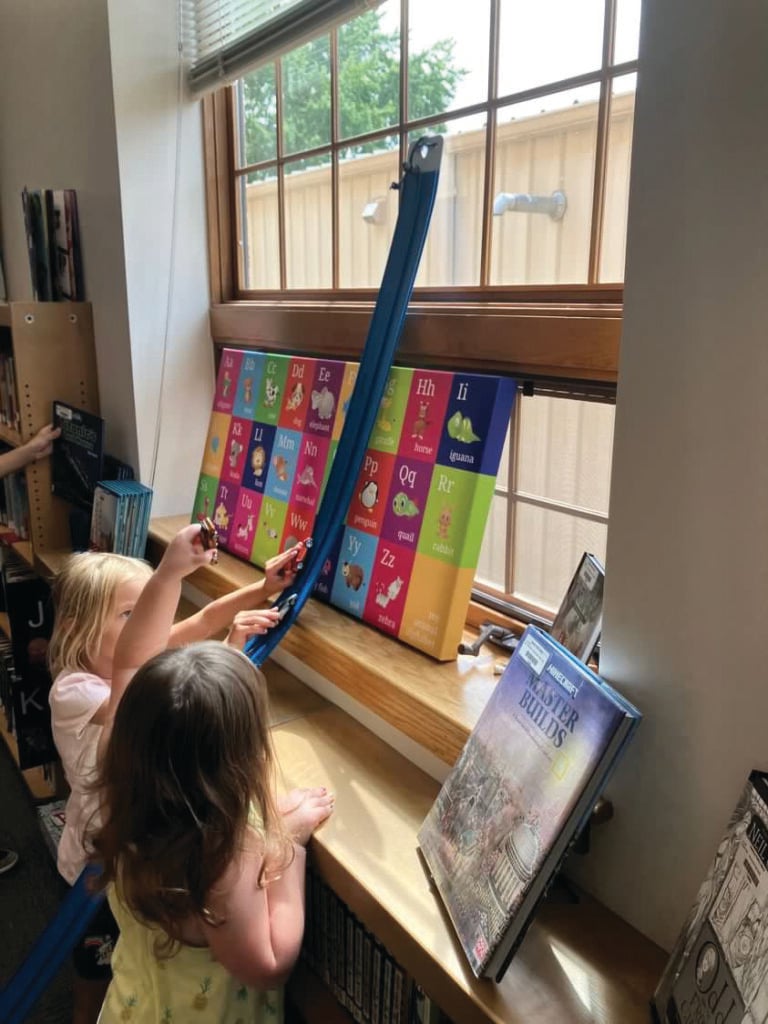
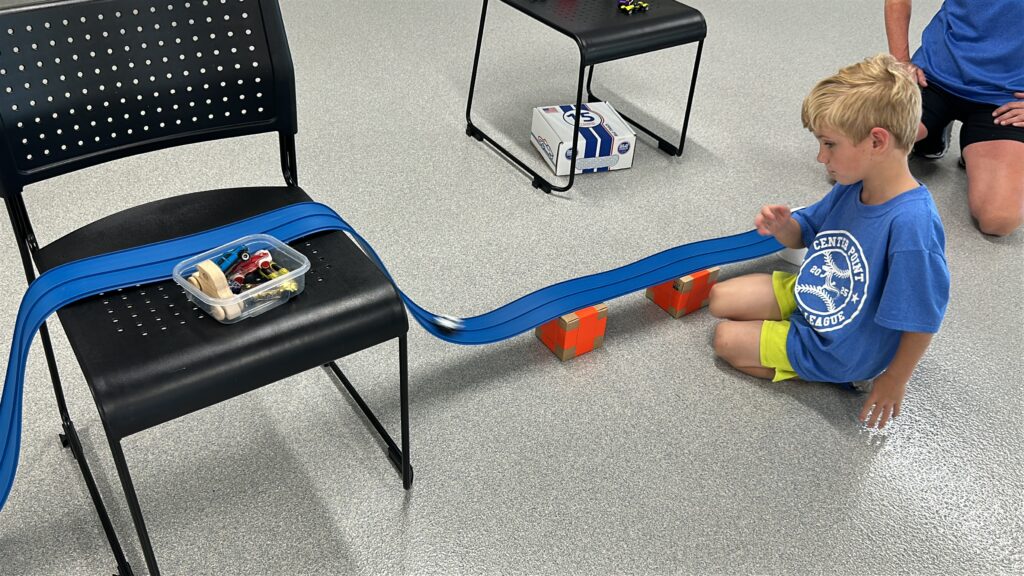
With Blu Track: Movers tend to turn any toy into a competition, and Blu Track is happy to oblige. Set up a simple race to see which car is fastest, or build a ramp and see whose car jumps highest over a box. The curiosity that drives a mover to test, retest, and tweak the setup is exactly the energy this kind of open-ended racing rewards.
What it looks like: This child wants to talk the second they see you, asks if a friend can come over, or seems restless and a little lonely if the afternoon is too quiet or solitary. For these kids, being around people all day at school didn’t drain them — it fueled them, and now they want more of it, just on their own terms.
What helps:
Try this: If daily playdates aren’t realistic, a standing weekly one (even 30 minutes) can go a long way toward meeting this need consistently.
With Blu Track: Building and racing tracks is naturally social — it invites another person in without requiring a lot of setup or explanation. A caregiver or friend can sit down and physically race cars with your child, then keep redesigning the course together by adding a curve, a loop, or a turn. Each new idea gives the connection something fresh to talk about, which is exactly what keeps a connector engaged.
What it looks like: This child gravitates toward LEGO, drawing, building forts, baking, or any project where they can use their hands and see something take shape. They recharge by creating — it gives them a sense of control and accomplishment after a day of following other people’s instructions.
What helps:
Try this: A dedicated “maker bin” of art and building supplies makes it easy for kids to dive into a project the moment they feel the pull, without needing you to set it up.
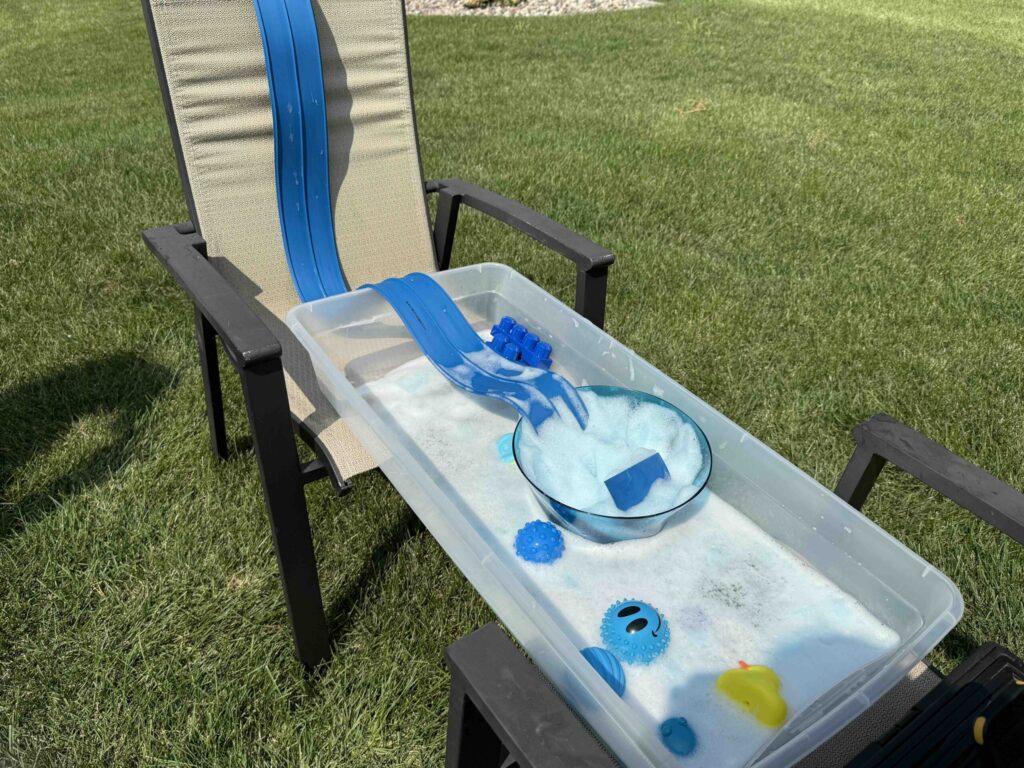
With Blu Track: Makers love a design challenge, and Blu Track pairs well with whatever else is already lying around the house. Have your child sketch out a track design where cars go over, under, or through an obstacle, then build it using two pillows, a box, or a jump rope as the target. The landing spot can be as simple as a block house, a “crash pit” made from crumpled paper, or anything else their imagination points them toward — the goal is the invention, not a finished product that looks a certain way.
Kids can be a blend — and it can change day to day. Think of these as tendencies to notice, not boxes to lock your child into.
It’s okay to offer, not dictate. A simple “Do you want to run around, chat about your day, build something, or just have some quiet time?” hands the choice back to your child and helps them build self-awareness about their own needs — a skill that will serve them well long after the school years.
Underneath all of this is something worth celebrating: kids being kids. The quiet processor curling up with a book, the mover doing laps around the yard, the connector chattering nonstop about their day, the maker elbow-deep in a pillow-fort racetrack — none of it needs to be optimized, scheduled, or turned into a lesson. It’s just childhood, doing what childhood does best.
And it’s worth remembering that the need to refuel doesn’t end at age 12. Adults run on the same basic wiring — some of us need quiet after a long day, some need a walk, some need to call a friend, some need to get our hands on a project. The next time you’re tempted to push through instead of recharging, take a cue from your kids — and give yourself permission to refuel and play, too.
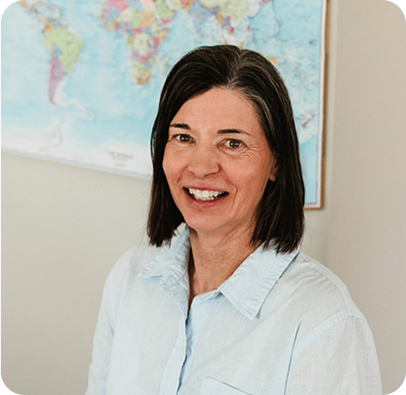
Amy Fuller-Belding (MA), Education: Communications Specialist at Blu Track®, brings 30 years of classroom teaching experience and a deep commitment to play advocacy to the team. With a Master of Arts in Teaching and Coaching, Amy focuses on the educational and accessibility aspects of Blu Track® products, ensuring they inspire resilience and curiosity in kids of all ages. Her work is driven by a comprehensive approach to curriculum development that encompasses early childhood education all the way through to professional development for educators. Amy is particularly passionate about equity in education, frequently adapting tools and strategies to ensure that students with a wide range of unique learning needs find success and engagement. As Blu Track® exhibits at the ALA convention for the first time, Amy looks forward to connecting her professional expertise with her personal love for learning and exploring local libraries.